 Work Quest Hub
How to Become a Veterinary Technician: Education, Certifications, and Steps
Credential titles, accredited program options and the national exam explained, plus what the work actually looks like before you commit two years to it.

By Marcus BellweatherNov 15, 2026 · 10 min read
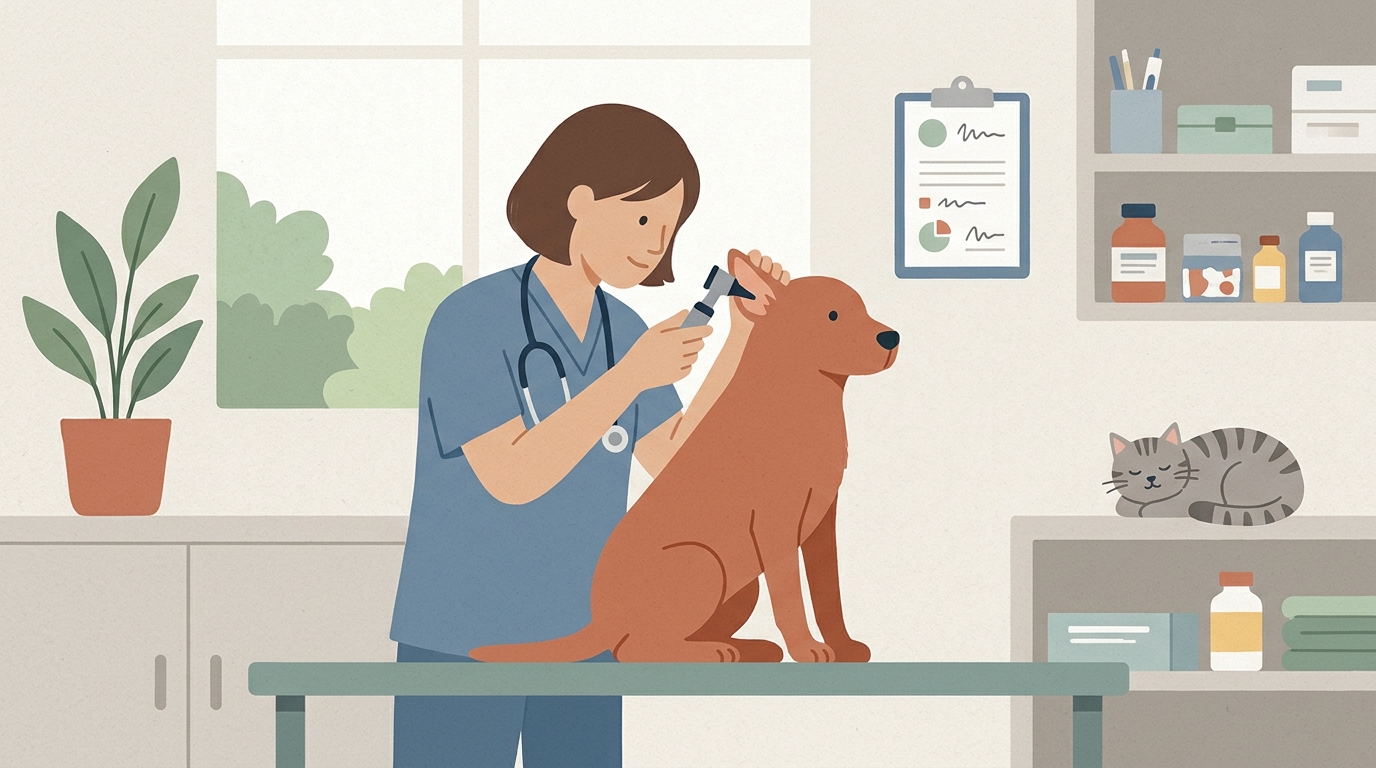
Becoming a veterinary technician means completing a postsecondary program in veterinary technology (U.S. Bureau of Labor Statistics, 2025) — most commonly an associate's degree, which CareerOneStop (U.S. Department of Labor) lists as the typical entry-level training — and then passing a credentialing exam. Most states require the Veterinary Technician National Examination (VTNE), offered by the American Association of Veterinary State Boards (U.S. Bureau of Labor Statistics, 2024).
From a standing start with no degree, the associate's route runs roughly two to two and a half years before you hold a state credential and can apply for jobs under a protected title. Rules, titles and exam requirements are set state by state, so the board where you plan to work is the authority on your path.
What a Veterinary Technician Actually Does
A veterinary technician is the person doing the hands-on clinical work a veterinarian orders. O*NET OnLine (2026) lists core tasks for the occupation including performing medical tests in a laboratory environment, preparing vaccines and serums, and cleaning and sterilizing instruments and equipment.
In a general practice, a weekday often runs like this. You open by checking inpatients, taking temperatures, pulses and respirations, and recording them in the patient record. Morning surgery means placing intravenous catheters, inducing and monitoring anesthesia, watching capnography and pulse oximetry readings, and logging vitals every few minutes on an anesthesia sheet. Between procedures you run in-house laboratory work — packed cell volume, blood chemistry panels, urinalysis, fecal flotations, ear cytology slides read under a microscope.
Afternoons bring appointments: restraining a fractious cat for a blood draw, positioning for radiographs and setting exposure, drawing up and labeling vaccines, performing dental prophylaxis with an ultrasonic scaler, trimming nails, and discharging patients with written medication instructions. Instruments go into an ultrasonic cleaner and then an autoclave, with sterilization indicators checked and packs dated. Controlled drug logs get reconciled before you leave.
Settings vary. O*NET OnLine (2026) reports that 90% of this occupation sits in Professional, Scientific, and Technical Services — which covers private veterinary practices — but the same skills are used in emergency and specialty hospitals, university teaching hospitals, research facilities, shelters and zoos. Emergency work swaps routine dentals for triage, fluid resuscitation and overnight shifts.
Is This Career a Fit for You
- Comfortable on your feet for a full shift, lifting and restraining animals. Restraint for blood draws, radiographs and nail trims is physical, and large dogs do not hold still on request.
- Steady hands and tolerance for repetitive precision work. Placing catheters, drawing up vaccines and serums, and reading cytology slides are small-motor tasks done many times a day (O*NET OnLine, 2026).
- Able to stay methodical under time pressure. Anesthesia monitoring means recording vitals on a schedule while a procedure is underway and flagging changes immediately.
- Not squeamish about blood, feces, wounds, parasites or euthanasia. Laboratory work, abscess flushes and end-of-life appointments are routine, not exceptional.
- Willing to be told what to do by a veterinarian. Technicians work under veterinary direction and cannot diagnose or prescribe; scope of practice is set by each state's veterinary board.
- Comfortable with difficult money conversations. You will present estimates to owners who may decline care, and then carry out the plan they can afford.
- Prepared to study for a national exam and keep studying afterwards. NAVTA states technicians must pass a credentialing exam and complete continuing education to stay credentialed.
- Open to evenings, weekends and holidays. Emergency and specialty hospitals staff around the clock, and general practices usually rotate weekend coverage.
Steps to Break In
- Check the rules in the state where you want to work (1–2 weeks). The credentialing title varies by state and may be licensed (LVT), registered (RVT) or certified (CVT) — NAVTA notes all three are in use, and O*NET OnLine (2026) lists all three as reported job titles. Read your state veterinary board's requirements before you pay any tuition. Nevada, for example, requires graduation from an AVMA-approved animal health technology program, a state jurisprudence exam, the VTNE and a letter of recommendation from someone in veterinary practice (CareerOneStop, U.S. Department of Labor).
- Get inside a clinic first (1–3 months, part-time). Apply for veterinary assistant or kennel positions at general practices, emergency hospitals or shelters, or ask to shadow. Many programs want applicants who have seen the work, and you will find out quickly whether the physical and emotional side suits you.
- Enroll in a veterinary technology program accredited by the AVMA Committee on Veterinary Technician Education and Activities (CVTEA). The CVTEA accredits programs throughout the United States and Canada (American Veterinary Medical Association). The U.S. Bureau of Labor Statistics (2025) states technologists and technicians must complete a postsecondary program in veterinary technology. An associate's degree takes about two years; CVTEA also maintains a list of accredited four-year Bachelor of Science programs (AVMA, 2026).
- Complete your clinical rotations or preceptorship inside the program (included in the 2–4 years). This is where catheter placement, anesthesia monitoring, dental scaling and radiographic positioning get signed off. Treat the host clinic as a long job interview — preceptorship sites hire graduates they already trained.
- Apply for and pass the VTNE (allow 2–4 months around graduation). The exam is administered by the American Association of Veterinary State Boards and delivered at Prometric and PSI testing centers in the U.S. and Canada in three windows a year. It has 170 multiple-choice items — 150 scored and 20 unscored pilot questions — within a three-hour limit, and candidates may take it up to five times (AAVSB via PSI Exams). Plan your application around the window dates rather than assuming you can test on demand.
- Apply for your state credential (4–8 weeks). Submit transcripts, VTNE scores and any state-specific items such as a jurisprudence exam or a practice reference. The AAVSB states it does not license, certify or register veterinary technicians — your state board does.
- Apply for entry-level roles and start continuing education. Target general practices, emergency and specialty hospitals, shelters and university teaching hospitals. NAVTA notes continuing education is required to stay credentialed, so log it from your first renewal cycle.
Education and Certification Options
| Path | Time to Complete | Approximate Cost | Where Required |
|---|---|---|---|
| AVMA CVTEA-accredited associate's degree in veterinary technology | About 2 years full-time; CareerOneStop (U.S. Department of Labor) lists an associate's degree as typical entry-level training | Published tuition varies by state residency and by public or private school — check each program's tuition page and the school's net price calculator | Accepted by states whose boards require graduation from an AVMA-accredited program, such as Nevada (CareerOneStop) |
| AVMA CVTEA-accredited Bachelor of Science in veterinary technology | 4 years; CVTEA maintains a list of accredited bachelor's programs (AVMA, 2026) | Four years of tuition rather than two; compare published per-credit rates at each listed program | CareerOneStop notes veterinary technologists usually hold a bachelor's degree, while technicians need an associate's |
| VTNE (exam, not a degree) | One 3-hour sitting, 170 items, three windows a year; up to five attempts (AAVSB via PSI Exams) | Check the current fee on the AAVSB/PSI VTNE candidate information page | Most states require the VTNE for credentialing (U.S. Bureau of Labor Statistics, 2024; AVMA) |
| On-the-job veterinary assistant experience | Varies | Paid work | Does not substitute for an accredited program in states that require one; CareerOneStop lists program graduation among Nevada's licence requirements |
The associate's degree is the shortest honest route to a credential, and it is the one most career-changers take. Its disadvantage is real: it is still two years of full-time study with scheduled clinical rotations that are hard to fit around a full-time job, and it does not carry the technologist title that CareerOneStop associates with a bachelor's degree, which some research facilities and teaching hospitals prefer. The bachelor's costs you two extra years before you earn anything as a credentialed technician.
Before enrolling anywhere, confirm the program appears on the AVMA CVTEA accredited list and ask the admissions office directly how its graduates qualify for the VTNE. CareerOneStop's Certification Finder also lists additional certifications tied to this occupation if you later specialize.
How Long It Takes
These milestones assume the associate's degree route described in the Steps section, starting with no degree and no clinical experience.
- Month 0 — research and application. You confirm your state board's requirements and the credential title it uses (LVT, RVT or CVT, per NAVTA), then apply to an AVMA CVTEA-accredited program. Many programs admit once a year, so your actual start date may sit a few months out.
- Months 1–3 — clinic exposure. You take a veterinary assistant or kennel role, or shadow, while waiting for the term to begin.
- Month 24 (cumulative, from the first day of classes) — graduation. Two years of full-time study including clinical rotations, consistent with NAVTA's statement that technicians generally obtain 2–4 years of post-high-school education.
- Months 24–28 — VTNE. You apply for one of the three annual testing windows and sit the 170-item, three-hour exam at a Prometric or PSI center (AAVSB via PSI Exams). Candidates may test up to five times, so a first-attempt failure delays you by a window rather than ending the path.
- Months 28–30 — state credential and first job. Your board processes transcripts, scores and any state-specific items such as Nevada's jurisprudence exam and practice reference (CareerOneStop). You apply to general practices, emergency hospitals and shelters as a credentialed technician.
Total: roughly two and a half years from first class to credentialed hire. On the four-year bachelor's route (AVMA CVTEA, 2026), add two years to every milestone after graduation — about four and a half years in total.
Frequently asked questions
Can I work in a veterinary clinic before I'm credentialed?
Often yes, in a veterinary assistant or kennel role, but what you are allowed to do and what you may call yourself is set by each state's veterinary board. Titles such as LVT, RVT and CVT are protected in states that credential technicians (NAVTA). Ask the board in your state which tasks an uncredentialed assistant may legally perform before you accept a role.
What happens if I fail the VTNE?
You can retake it. The American Association of Veterinary State Boards (via PSI Exams) states candidates may take the VTNE up to five times. Because it runs in three windows a year, a failed attempt usually costs you a few months rather than ending your path. Check your state board's own retake and time-limit rules too, since the AAVSB does not license or register technicians itself.
Do online veterinary technology programs count?
Only if the program appears on the AVMA CVTEA accredited list — the committee accredits programs throughout the United States and Canada. Distance-format programs still require hands-on clinical hours, so ask admissions exactly where those hours are completed, who supervises them, and whether you must arrange the site yourself before you enroll.
Do I have to re-credential if I move to another state?
Usually you apply to the new state's board rather than transferring automatically. Requirements differ: Nevada, for example, requires a state jurisprudence exam and a letter of recommendation from someone in veterinary practice alongside the VTNE (CareerOneStop). Contact the board in your destination state before you move and ask what it accepts from your current credential.
How is pay usually structured for veterinary technicians?
Most clinic roles are hourly, with overtime, and emergency or overnight shifts often carry a differential. Specialty hospitals and university teaching hospitals may pay differently from small general practices, and rates vary considerably by state and metro area. For current figures, check the U.S. Bureau of Labor Statistics Occupational Outlook Handbook entry for veterinary technologists and technicians and the CareerOneStop wage data for your state.
What is the difference between a veterinary technician and a veterinary technologist?
Mainly the degree. CareerOneStop (U.S. Department of Labor) states technologists usually have a bachelor's degree in veterinary technology, while technicians need an associate's degree. Day-to-day clinical duties overlap heavily; the bachelor's is more often sought for research facility, teaching hospital and supervisory roles. Both routes lead to the same credentialing exam in most states.
Sources
- U.S. Bureau of Labor Statistics — Veterinary Technologists and Technicians : Occupational Outlook Handbook (2025)
- U.S. Bureau of Labor Statistics — Veterinary Technologists and Technicians : Occupational Outlook Handbook (print version) (2024)
Your coach for this guide
Marcus writes a running column on the economics of work, from gig platforms to apprenticeships. He's skeptical of easy career advice and prefers questions to conclusions.