 Work Quest Hub
How to Get a CDL Certified
Class A, B and C licenses differ by vehicle weight and passenger count, and a federal training rule now decides who must train before the skills test.

By Yuki Tanaka-ReevesNov 15, 2026 · 9 min read
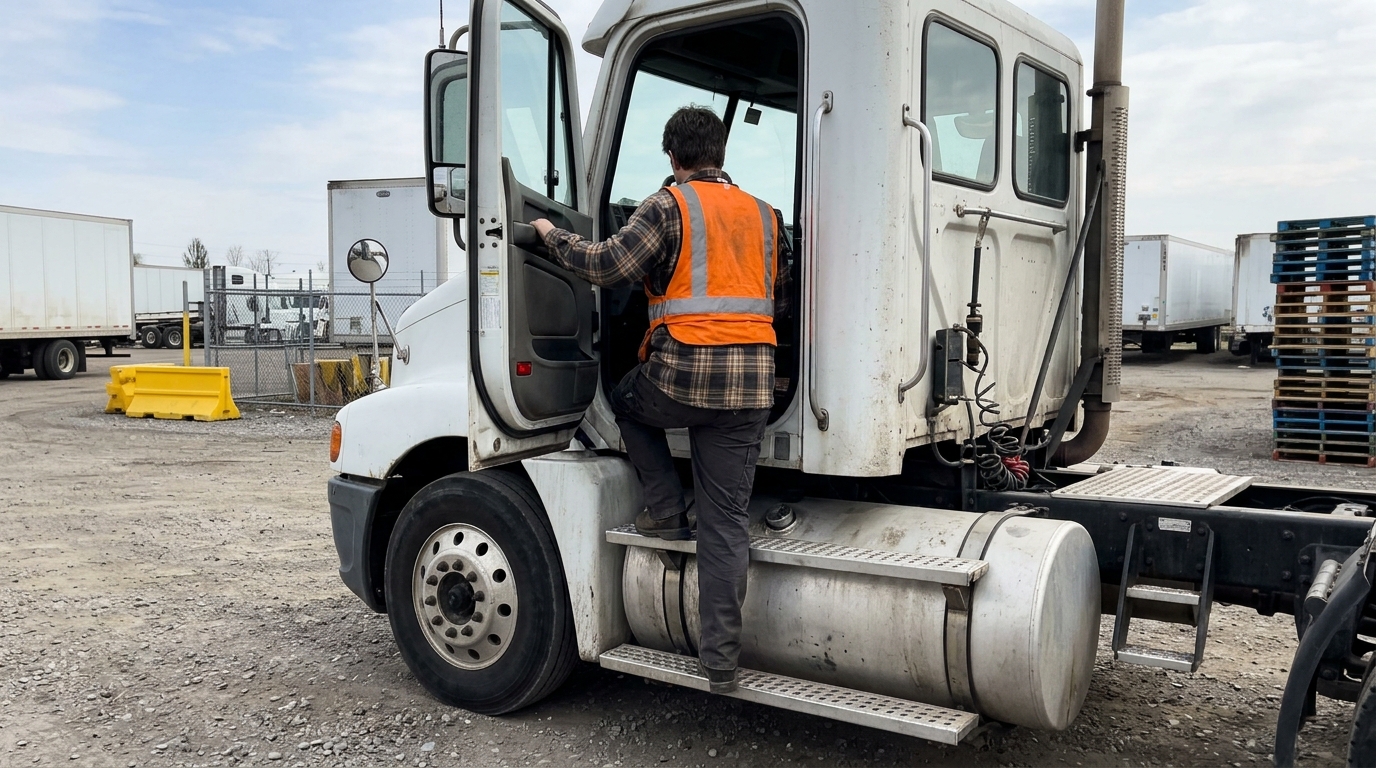
A commercial driver's license is issued by your state driver licensing agency, but the training standard behind it is federal. Since February 7, 2022, anyone getting a Class A or Class B CDL for the first time, upgrading Class B to Class A, or adding a passenger (P), school bus (S) or hazardous materials (H) endorsement for the first time must complete Entry-Level Driver Training with a provider listed on the Federal Motor Carrier Safety Administration's Training Provider Registry (DC Department of Motor Vehicles, undated).
The order matters: training first, skills test second. Fees, permit holding periods and renewal cycles are set by your state DMV, so the federal rule tells you what you must do and the state tells you what it costs.
What This Certification Covers
A CDL is not a single national exam. It is a license issued by your state driver licensing agency — DMV, MVA, BMV or Department of Public Safety, depending on the state — against standards set by the Federal Motor Carrier Safety Administration (FMCSA). Testing has two halves: written knowledge tests (general knowledge, plus one for each endorsement that requires it) and a skills test covering the pre-trip vehicle inspection, basic vehicle control in a range or yard, and the on-road drive.
Which class you need depends on the vehicle, not the job title:
- Class A — any combination of vehicles rated 26,001 pounds or more, with a towed unit rated over 10,000 pounds (FMCSA, undated). This is the tractor-trailer license.
- Class B — a single vehicle rated 26,001 pounds or more, or such a vehicle towing a unit not over 10,000 pounds (FMCSA, undated): straight trucks, dump trucks, most transit and school buses.
- Class C — vehicles that do not meet the A or B definitions but are designed to carry 16 or more passengers including the driver, or carry placarded hazardous materials or select agents and toxins (FMCSA, undated).
Endorsements unlock specific work, each with extra knowledge and/or skills tests: T for double and triple trailers (knowledge only), P for passenger (knowledge and skills), N for tank vehicles (knowledge only) and H for hazardous materials (knowledge only) (FMCSA, undated).
Who requires it: FMCSA's Entry-Level Driver Training regulations, set under 49 CFR Part 380 Subpart F, establish uniform minimum training standards for entry-level drivers seeking certain CDLs and endorsements (South Carolina Department of Motor Vehicles, undated). In practice a school district will not put you on a route without a Class B and an S endorsement, a transit or motorcoach operator needs P, and a fuel or chemical hauler needs N or H. States may also impose a more restrictive license category or extra endorsement and restriction codes, as long as those codes are explained on the license document (FMCSA, undated).
Eligibility Requirements
Each of these is pass/fail. Miss one and the state will not issue the permit or let you test.
- Hold a valid non-commercial driver's license in the state where you are domiciled, and apply there. You may hold only one driver's license.
- Meet your state's minimum CDL age for the driving you intend to do. FMCSA's Safe Driver Apprenticeship Pilot Program exists specifically to let qualified drivers aged 18 to 20 who hold intrastate CDLs explore interstate trucking (FMCSA, 2024). Confirm the age rule with your state DMV before enrolling anywhere.
- Pass the DOT physical with an examiner listed on FMCSA's National Registry of Certified Medical Examiners, and file the medical certificate with your state DMV.
- Self-certify your driving category (interstate or intrastate, excepted or non-excepted) at the DMV.
- Pass the knowledge tests and vision screening, then obtain a commercial learner's permit and hold it for the period your state requires before skills testing.
- Complete Entry-Level Driver Training — theory and behind-the-wheel — with a provider or trainer registered on FMCSA's Training Provider Registry. No entry-level operator may take the skills test for a Class A, Class B, P endorsement or S endorsement without it (DC Department of Motor Vehicles, undated).
- For an H endorsement, clear the Transportation Security Administration security threat assessment, including fingerprinting, and complete ELDT theory training before the knowledge test (FMCSA, undated).
- Produce the state's identity and residency documents, exactly as listed on your DMV's CDL checklist.
Some applicants are exempt from ELDT: anyone holding a valid CDL or an S, P or H endorsement issued before February 7, 2022 (J.J. Keller, undated); anyone who obtained a commercial learner's permit before February 7, 2022 and gets the CDL before that permit expires (South Carolina Department of Motor Vehicles, undated); drivers excepted from CDL requirements under 49 CFR Part 383; and military personnel whose commercial vehicle experience meets section 383.77 (FMCSA Training Provider Registry, undated).
Steps to Get Certified
- Pick your class and endorsements, then price the state fees. Use the weight and passenger definitions above, and list the endorsements your target employer type requires. Your state DMV publishes a CDL fee schedule covering the permit, each knowledge test, the skills test and the license — pull it up before you budget anything else.
- Pass the DOT physical and get your commercial learner's permit. See a medical examiner on FMCSA's National Registry, self-certify your driving category at the DMV, pass the general knowledge and endorsement tests, and pay the state's CLP fee. If your permit was issued before February 7, 2022, finishing the CDL before it expires keeps you outside the training rule (South Carolina Department of Motor Vehicles, undated).
- Enroll with a provider listed on FMCSA's Training Provider Registry. Search the registry itself rather than trusting a school's advertising; to be listed, providers must meet FMCSA requirements covering curriculum, facilities, instructors and vehicles or equipment (J.J. Keller, undated). Get total tuition in writing, including range time and any testing fees.
- Complete theory and behind-the-wheel training, then confirm it was reported. The curriculum is set out in 49 CFR Part 380 (DC Department of Motor Vehicles, undated). Behind-the-wheel training has range and public-road components, and the provider decides when you are proficient. Your provider submits the certification electronically to the Training Provider Registry, and the state cannot schedule your skills test until it posts.
- Schedule and pass the skills test, then collect the license. Testing is run by the state DMV or an authorized third-party examiner, each with its own fee, and you usually must supply a vehicle representative of the class you are testing for. On passing, you pay the state license fee and the CDL is issued with your class and endorsement codes printed on it.
Cost and Timeline by Path
No federal body sets CDL tuition or testing fees. Tuition is set by each registered training provider; permit, test and license fees are set by your state DMV. Those two published schedules are the only reliable numbers.
| Path or Provider | Total Cost | Time to Complete |
|---|---|---|
| Community or technical college CDL program on FMCSA's Training Provider Registry | Tuition published per term in the college catalog; DMV permit, test and license fees paid separately | Set by the program's published schedule; fixed term start dates, so expect a wait for a seat |
| Private truck driving school on the Training Provider Registry | Tuition quoted in the enrollment agreement; ask whether DMV testing fees and skills-test vehicle rental are included | Set by the school; full-time and part-time schedules, with more frequent start dates than a college term |
| Carrier-sponsored training where the carrier is on the Training Provider Registry | Tuition often advanced or reimbursed under a written contract; check the repayment terms if you leave early | Set by the carrier, followed by a supervised upgrade period with a trainer |
Carrier-sponsored training removes the biggest barrier, the upfront tuition bill, but it carries a real cost: you typically sign a contract committing you to that carrier for a set period, and leaving early makes the tuition repayable on terms you cannot negotiate. You also get less choice over equipment, freight type and home time.
Two other points apply to every route. Your state may impose training requirements beyond the federal ELDT minimums, so contact your state DMV for specifics (South Carolina Department of Motor Vehicles, undated). And if you are 18 to 20 and using FMCSA's Safe Driver Apprenticeship Pilot Program — a three-year commercial driver apprenticeship under Section 23022 of the Bipartisan Infrastructure Law — interstate approval comes with a condition: during probationary periods a qualified, experienced driver must ride in the passenger seat (FMCSA, 2024).
Frequently asked questions
How often do I renew a CDL, and what else expires?
The renewal cycle and fee are set by your state driver licensing agency, not by FMCSA, so check your state DMV's CDL page. Separately, your DOT medical certificate has its own expiry set by the certified medical examiner, and you must keep a current one on file with the state. Hazardous materials (H) endorsement holders must also renew the TSA security threat assessment.
If I fail the skills test, can I retake it?
Yes. Waiting periods between attempts, how many attempts you get before reapplying, and the retest fee are set by your state DMV or the authorized third-party tester. You do not repeat Entry-Level Driver Training to retest — once your provider submits the certification to FMCSA's Training Provider Registry, it stays on record.
Does my CDL work in other states?
A CDL is issued by the state where you are domiciled and you may hold only one. When you move your domicile, you transfer the license rather than adding a second. Note that states may use a more restrictive license category or additional endorsement and restriction codes than the federal rules, provided those codes are explained on the license document (Federal Motor Carrier Safety Administration (FMCSA), undated).
My old CDL lapsed. Do I have to do ELDT again?
No. A driver is not required to complete entry-level driver training to obtain a CDL even if a previously issued CDL has since lapsed (FMCSA Training Provider Registry, undated). The rule also does not apply to anyone holding a valid CDL or an S, P or H endorsement issued before February 7, 2022 (J.J. Keller, undated). Your state may still require you to retest.
How do I know a school's training will actually count?
Check FMCSA's Training Provider Registry before paying. Only listed providers can certify your training, and listing requires meeting FMCSA standards for curriculum, facilities, instructors and vehicles or equipment (J.J. Keller, undated). After you finish, confirm the provider has submitted your certification electronically — the state cannot schedule your skills test until that record arrives.
Sources
- Federal Motor Carrier Safety Administration (FMCSA) — Drivers | FMCSA
- DC Department of Motor Vehicles — Entry-Level Driver Training
Your coach for this guide
Yuki covers early-career life, internships, and the strange first years of figuring out what work is for. She writes with the fresh impatience of someone still sorting out her own path.